When a 3.5mm dental implant screw must withstand decades of chewing pressure, and a thread precision deviation of just 0.001mm can compromise assembly stability, quality control for dental implant components has transcended basic "compliance" to become a precise art that impacts patients’ health and quality of life. As a professional manufacturer with 13 years of expertise in dental implant restoration, M6 Dental has built an unassailable quality moat for implant components through end-to-end digital control, micrometer-level precision manufacturing, and a rigorous quality assurance system—ensuring every product serves as a reliable cornerstone for clinical success. 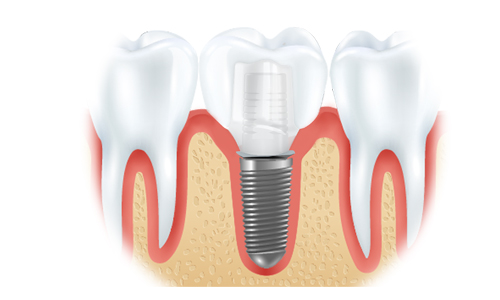
Full-Cycle In-House Control: A Closed-Loop Quality System from Raw Material to Delivery
M6 Dental recognizes that quality begins at the source and permeates every stage. The factory achieves 100% in-house control across the entire lifecycle—from R&D and design, raw material procurement, and production to packaging and delivery. This vertical integration is the core guarantee of consistent quality. During raw material selection, each batch undergoes spectral analysis and mechanical property testing to ensure biocompatibility and mechanical strength meet medical-grade standards.
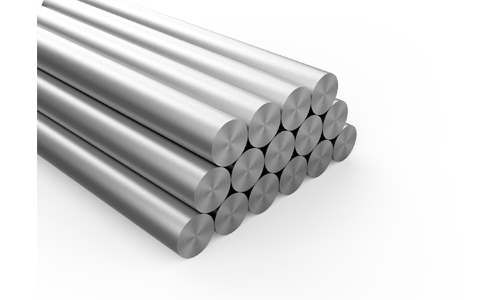
45 specialized production lines adopt a modular layout, supporting a monthly output of over 420,000 units while minimizing cross-contamination risks through zone-specific control. Rejecting "black-box operations," M6 has established a full-lifecycle product traceability system. Each implant component is assigned a unique identification code, enabling real-time access to critical information such as production equipment, operators, and inspection data—achieving complete traceability "from workshop to clinic."
Precision Manufacturing: Dual Assurance from Japanese CNC Equipment
Implant components demand micrometer-level precision, driving continuous upgrades to production equipment. M6 has introduced high-end precision CNC machines—including Citizen and Star from Japan—with a repeat positioning accuracy of within ±0.002mm (2 micrometers). This ensures the fitting precision between each implant abutment and implant, as well as the dimensional tolerances of all restoration connecting parts, perfectly align with design parameters. For example, the fit clearance between abutments and implants is strictly controlled between 0.01-0.02mm (10-20 micrometers)—a precision level unattainable through manual operation alone. 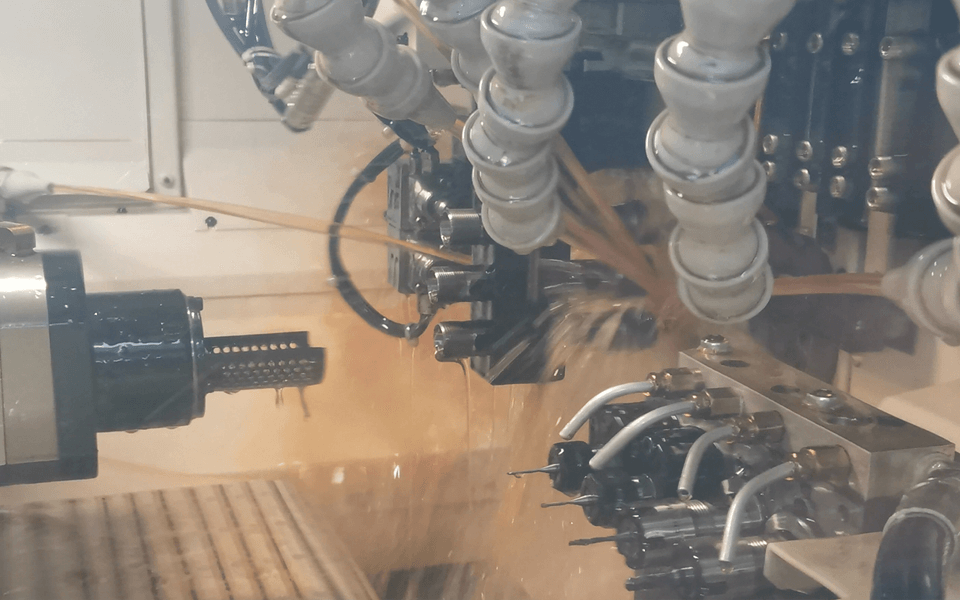
Safeguarding Precision and Stability
Surface treatment of implant components must balance functional needs and precise adaptability. M6 has established high-standard production workshops and process criteria for this stage, adopting differentiated solutions based on component applications:
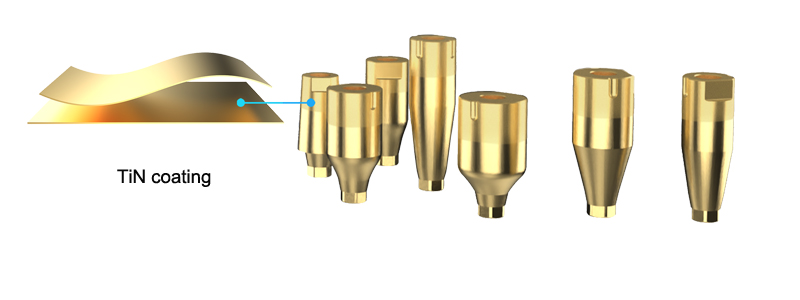
To guarantee consistency and stability of surface treatments:
This "differentiated process + precision control" model ensures surface treatments are tailored to functional needs while maintaining full quality oversight.
Three-Tier Quality Control: Rigorous Validation for Every Detail
At M6, quality inspection is not the end of production but an "embedded" process throughout, built on three core pillars: standardization, professionalism, and clinical validation. All implant components must pass three interlocking rigorous checks:
Digital Empowerment: Building an Intelligent Quality Ecosystem
As a pioneer in digital dental implantology, M6 integrates digital technology deeply into its quality control system, constructing a "precision safeguard network" from design to production.
This digital transformation not only enhances quality control efficiency but also achieves "data-driven dual guarantees of precision and stability." By analyzing historical processing data and quality inspection results, M6 accurately identifies key variables affecting precision. For example, when addressing thread precision fluctuations in a specific abutment model, the system traced the correlation between CNC tool usage time and thread pitch diameter deviation—discovering that tool wear exceeding 0.003mm caused precision degradation. Optimizing tool replacement cycles increased the product’s dimensional pass rate from 98.5% to 99.8% and narrowed thread precision fluctuation to ±0.001mm, ensuring consistent precision across batches.
Additionally, digital systems conduct cross-analysis of raw material properties, processing parameters, and finished product precision across batches, building precision prediction models to proactively control stability—turning micrometer-level precision from an "occasional achievement" into an "inevitable outcome."
Quality as a Visible Commitment
When you open an M6 Dental product package, you receive more than just precision implant components—you get the culmination of 13 years of manufacturing expertise, the synergy of 45 production lines, and the rigor of countless inspections. From millimeter-scale dimensional control to micrometer-level surface regulation, from end-to-end in-house management to digital intelligence empowerment, M6 embodies the industry belief of "quality first" through uncompromising attention to detail. For dental laboratories and clinicians, choosing M6 implant components means choosing a reliable quality commitment—and a solemn promise to safeguard patients’ smiles.


